Apollo Group TV Windows & Mac Desktop Installation Guide: Complete PC Setup Tutorial (2025)
Meta Description
Quick Answer: Can You Install Apollo Group TV on Windows & Mac?
Yes, you can use Apollo Group TV on Windows and Mac computers, though there isn’t a dedicated native desktop application. The most effective Apollo Group TV Windows & Mac Desktop Installation methods include using Android emulators like BlueStacks or NoxPlayer, accessing the web-based player through your browser, or utilizing IPTV media players like VLC that support M3U playlists. This guide covers all available methods to help you stream Apollo IPTV content seamlessly on your PC in 2025.
The Apollo Group TV Windows & Mac Desktop Installation process takes approximately 10-15 minutes depending on your chosen method and internet connection speed.
Table of Contents
- Understanding Apollo Group TV for Desktop
- System Requirements for Windows and Mac
- Available Installation Methods Comparison
- Method 1: Using Android Emulator (Recommended)
- Method 2: Web Browser Access
- Method 3: VLC Media Player with M3U Playlist
- Method 4: IPTV Smarters Pro for Desktop
- Apollo Group TV PC Setup and Configuration
- Apollo Group TV Activation PC Process
- Optimizing Performance on Desktop
- Troubleshooting Common Desktop Issues
- Pros and Cons of Each Method
- Expert Tips for Desktop Streaming
- Common Mistakes to Avoid
- Security and Privacy Considerations
- People Also Ask Questions
- Conclusion
- FAQs
<a name=”understanding-apollo-desktop”></a>
Understanding Apollo Group TV for Desktop
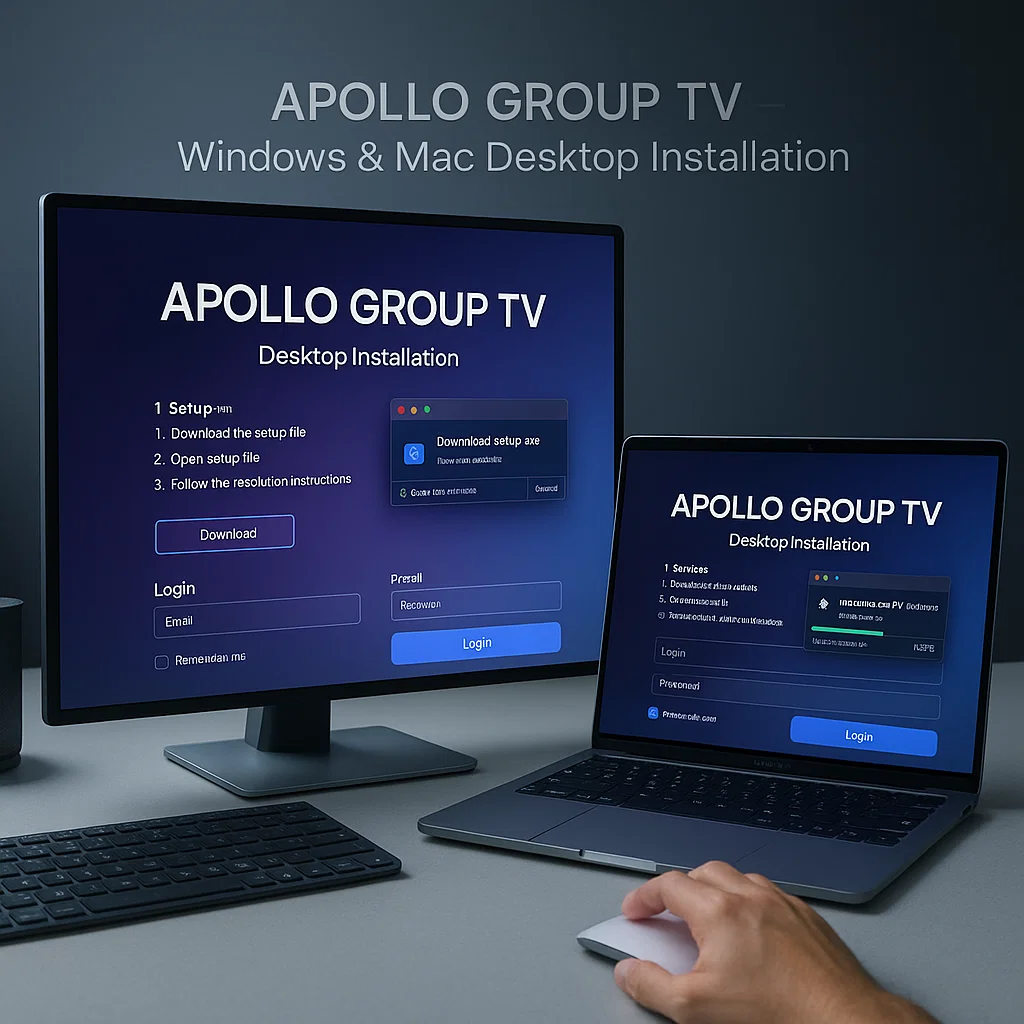
Apollo Group TV operates as an IPTV service that delivers live television channels, movies, sports, and on-demand content through internet streaming protocols. While the service primarily targets mobile and smart TV users, many subscribers want to access content on their computers for larger screens, better multitasking, or when other devices aren’t available.
Why Use Apollo IPTV on PC?
Desktop streaming offers several distinct advantages over mobile or television viewing. Your computer provides superior multitasking capabilities, allowing you to work while watching content in a corner window. Larger monitor screens enhance the viewing experience, especially for sporting events or detailed visual content.
Additionally, computer-based streaming gives you access to powerful screenshot tools, recording software, and better audio management through advanced sound systems. Power users appreciate the ability to customize their viewing experience using desktop-exclusive software features.
Current State of Apollo Group TV Desktop Apps
As of 2025, Apollo Group TV hasn’t released official dedicated desktop applications for Windows or MacOS. This situation mirrors most IPTV providers who focus development resources on mobile apps and smart TV platforms where demand concentrates most heavily.
However, this limitation doesn’t prevent desktop access. Multiple workaround methods provide excellent functionality, each with unique benefits depending on your specific needs and technical comfort level.
<a name=”system-requirements”></a>
System Requirements for Windows and Mac
Before proceeding with Apollo Group TV Windows & Mac Desktop Installation, verify your computer meets the minimum specifications for smooth streaming performance.
Windows System Requirements
For basic streaming functionality, your Windows PC should run Windows 10 or Windows 11 (64-bit versions recommended). Minimum hardware includes an Intel Core i3 processor or AMD equivalent, 4GB RAM, and at least 2GB available storage space.
For optimal performance, especially with HD and 4K content, upgrade to an Intel Core i5 or AMD Ryzen 5 processor, 8GB RAM, and a dedicated graphics card. These specifications ensure smooth playback without buffering or frame drops.
Your internet connection should maintain consistent speeds of at least 10 Mbps for standard definition, 25 Mbps for 1080p HD content, and 50 Mbps for 4K ultra HD streaming.
Mac System Requirements
Mac users need macOS Catalina (10.15) or newer versions for best compatibility with modern streaming solutions. Hardware requirements mirror Windows specifications: minimum dual-core Intel processor or Apple M1/M2 chip, 4GB RAM, and 2GB storage space.
MacBooks and iMacs with Apple Silicon (M1, M2, M3 chips) deliver exceptional streaming performance even at lower RAM configurations due to integrated architecture efficiencies. Intel-based Macs may require higher specifications for similar performance levels.
Network Requirements
Wired ethernet connections provide superior stability for IPTV streaming compared to WiFi. If using wireless connections, ensure your computer supports at least WiFi 5 (802.11ac) standards. WiFi 6 (802.11ax) offers even better performance for households with multiple streaming devices.
Position your computer within strong WiFi range or use ethernet cables for the most reliable Apollo IPTV desktop app experience.
<a name=”installation-methods-comparison”></a>
Available Installation Methods Comparison
Understanding each installation approach helps you select the method that best fits your technical skills and usage preferences.
Quick Comparison Table
The Android emulator method offers the most complete Apollo Group TV experience, providing access to all app features as if using a mobile device. Setup complexity rates moderate, requiring emulator installation and configuration.
Web browser access delivers the simplest setup—just navigate to the Apollo Group TV web portal and log in. However, functionality limitations and reduced feature sets make this a compromise solution.
VLC Media Player with M3U playlists provides excellent performance with minimal resource usage. This method suits users comfortable with playlist management but lacks the polished interface of dedicated apps.
IPTV Smarters Pro desktop applications offer middle-ground functionality with professional interfaces designed specifically for desktop viewing. Installation requires downloading unofficial desktop builds.
<a name=”method-1-emulator”></a>
Method 1: Using Android Emulator (Recommended)
Android emulators create virtual Android environments on your Windows or Mac computer, allowing you to install and run mobile applications seamlessly. This method provides the most comprehensive Apollo Group TV for Windows and Apollo Group TV for Mac experience.
Step 1: Download and Install BlueStacks
BlueStacks represents the most popular and reliable Android emulator for desktop computers. Visit the official BlueStacks website at bluestacks.com using your web browser. Click the prominent download button for your operating system—the site automatically detects whether you’re using Windows or Mac.
The BlueStacks installer file is approximately 600MB and downloads within 2-5 minutes on most broadband connections. Once downloaded, locate the installer file in your downloads folder and double-click to launch.
Follow the on-screen installation wizard. Accept the license agreement, choose your installation location (default settings work well for most users), and click Install. The installation process takes 5-10 minutes depending on your computer’s specifications.
Step 2: Complete BlueStacks Initial Setup
Launch BlueStacks after installation completes. The emulator requires a Google account to access the Play Store. Sign in with an existing Gmail account or create a new one specifically for emulator use.
BlueStacks may prompt you to enable virtualization in your computer’s BIOS settings if not already active. Most modern computers have this enabled by default, but older systems may require manual activation. The emulator provides detailed instructions if this step becomes necessary.
Step 3: Install Apollo Group TV APK
Within BlueStacks, you have two installation options. The first involves using the Google Play Store if Apollo Group TV maintains a listing there. Open the Play Store app, search for “Apollo Group TV,” and install directly.
More commonly, you’ll need to sideload the APK file. Using your regular web browser (outside BlueStacks), download the official Apollo Group TV APK from the link provided with your subscription. Locate the downloaded APK file on your computer.
Drag and drop the APK file directly onto the BlueStacks window. The emulator automatically detects the file and begins installation. Alternatively, use BlueStacks’ “Install APK” feature found in the sidebar menu to browse for the file manually.
Step 4: Launch and Configure Apollo Group TV
Once installation completes, Apollo Group TV appears in your BlueStacks app drawer. Click the icon to launch the application. The app behaves identically to running on an Android phone or tablet.
You can customize BlueStacks settings to optimize performance. Access settings through the hamburger menu icon, then select “Performance.” Allocate more RAM and CPU cores if your computer has resources to spare—4GB RAM and 4 CPU cores provide excellent performance for streaming applications.
Enable high frame rate mode for smoother video playback. Navigate to Settings > Display and set FPS to 60 for optimal viewing experience.
Alternative Emulators
While BlueStacks excels for most users, alternatives exist. NoxPlayer offers a lighter-weight option that consumes fewer system resources, ideal for older computers. MEmu provides gaming-focused features with excellent keyboard mapping capabilities.
LDPlayer emphasizes performance and stability, particularly for users running multiple instances simultaneously. Each emulator follows similar installation procedures with minor interface variations.
<a name=”method-2-browser”></a>
Method 2: Web Browser Access
Browser-based access provides the quickest path to install Apollo IPTV on PC, though with feature limitations compared to app-based methods.
Setting Up Browser Access
Check whether your Apollo Group TV subscription includes web portal access. Not all IPTV providers offer browser-based viewing, but many have implemented web players due to increasing demand.
Open your preferred web browser—Chrome, Firefox, Safari, or Edge all work well. Navigate to the Apollo Group TV web portal URL provided in your subscription email or account dashboard.
Log in using your Apollo Group TV credentials. The web interface typically displays a simplified layout with channel categories, search functionality, and basic playback controls.
Optimizing Browser Performance
Enable hardware acceleration in your browser settings for smoother video playback. In Chrome, navigate to Settings > Advanced > System and ensure “Use hardware acceleration when available” is toggled on.
Install browser extensions that enhance streaming experiences. Extensions like “h264ify” force YouTube and other sites to use efficient video codecs, though compatibility with IPTV portals varies.
Clear your browser cache regularly to prevent playback issues caused by corrupted temporary files. Most browsers offer cache clearing options in Settings > Privacy or similar menus.
Browser Method Limitations
Web-based viewing typically offers reduced functionality compared to native applications. Electronic program guides may be simplified or absent. Recording features, if available through the app, usually aren’t accessible via browser.
Some channels may not stream properly through browsers due to codec limitations or DRM restrictions. Browser-based streaming also consumes more CPU resources than optimized applications, potentially causing fan noise on laptops.
<a name=”method-3-vlc”></a>
Method 3: VLC Media Player with M3U Playlist
VLC Media Player provides a powerful, free solution for Apollo Group TV MacOS installation and Windows setup when using M3U playlist files.
Installing VLC Media Player
Download VLC from the official VideoLAN website at videolan.org. The software is completely free and open-source, available for Windows, Mac, and Linux operating systems.
Install VLC following standard software installation procedures for your operating system. Windows users run the .exe installer, while Mac users drag the VLC icon to their Applications folder.
Obtaining Your M3U Playlist URL
Log into your Apollo Group TV account through the web portal. Navigate to account settings or subscription details where providers typically display M3U playlist URLs or allow playlist file downloads.
Copy the M3U URL to your clipboard. This URL contains all channel information and streaming links formatted for media player compatibility. The URL typically looks like: http://example.com/get.php?username=XXXX&password=YYYY&type=m3u_plus
Adding Apollo Group TV to VLC
Open VLC Media Player on your computer. From the menu bar, select Media > Open Network Stream (Windows) or File > Open Network (Mac).
Paste your M3U playlist URL into the network URL field. Click Play or Open depending on your VLC version. VLC processes the playlist and displays available channels in the playlist panel.
Organizing Channels in VLC
VLC’s playlist view shows all available channels from your Apollo Group TV subscription. Right-click channels to add them to favorites for quick access. Create custom playlists by selecting channels and using File > Save Playlist to create organized collections.
Use VLC’s search functionality to quickly locate specific channels within large playlists containing hundreds or thousands of entries.
VLC Advanced Configuration
Enhance streaming quality by adjusting VLC’s network caching settings. Navigate to Tools > Preferences > Show Settings (All) > Input/Codecs. Increase “Network caching” value to 3000-5000 milliseconds if you experience buffering.
Enable hardware decoding to reduce CPU usage during playback. In Preferences, select Input/Codecs and set “Hardware-accelerated decoding” to Automatic or specific options matching your graphics card.
<a name=”method-4-iptv-smarters”></a>
Method 4: IPTV Smarters Pro for Desktop
IPTV Smarters Pro offers unofficial desktop applications that provide dedicated interfaces designed specifically for computer-based IPTV viewing.
Understanding IPTV Smarters Desktop
IPTV Smarters Pro primarily exists as a mobile application, but community developers have created desktop ports for Windows and Mac. These applications aren’t official releases but provide stable functionality for Apollo IPTV desktop app needs.
The desktop versions maintain the clean interface and feature-rich experience of the mobile app while optimizing controls for keyboard and mouse input.
Installing IPTV Smarters on Desktop
Search for “IPTV Smarters Pro desktop download” through reputable tech forums or the provider’s official channels. Download the installer appropriate for your operating system.
Windows users receive .exe installer files, while Mac users get .dmg disk images. Run the installer and follow installation prompts standard for your operating system.
Configuring IPTV Smarters with Apollo Group TV
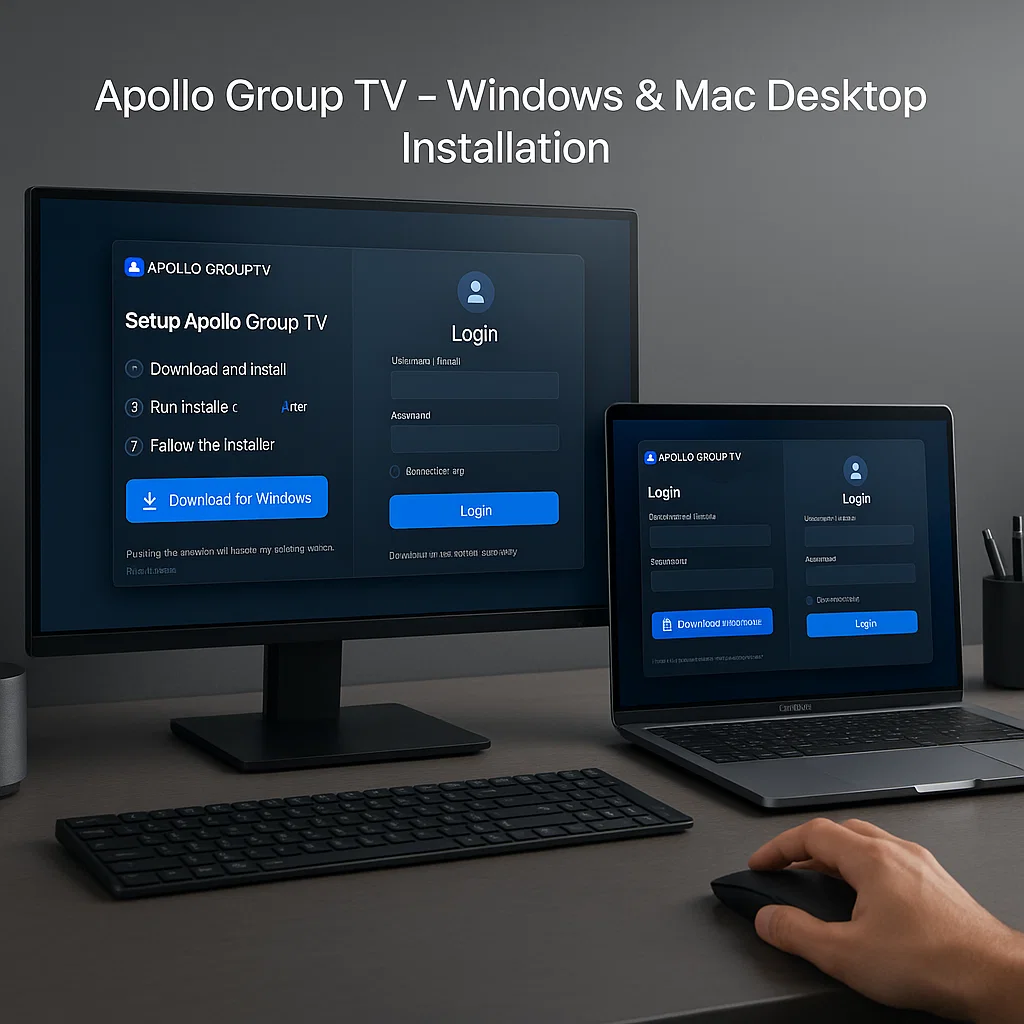
Launch IPTV Smarters Pro after installation completes. The app presents several login options including Xtream Codes API, M3U URL, or playlist file upload.
Most Apollo Group TV subscriptions provide Xtream Codes API credentials. Enter the following information:
- Username: Your Apollo Group TV username
- Password: Your Apollo Group TV password
- Server URL: The API URL provided by Apollo Group TV
Click “Add User” to save your credentials and load channel data. The app downloads channel logos, EPG information, and organizes content into categories.
Alternatively, use the M3U URL option if your subscription provides this format. Paste the M3U URL and let the application process the playlist.
<a name=”setup-configuration”></a>
Apollo Group TV PC Setup and Configuration
Regardless of which installation method you choose, proper configuration maximizes your viewing experience.
Initial Application Configuration
After installing your chosen application, spend time customizing settings before diving into content. Adjust video quality settings to match your internet speed—start with automatic quality adjustment, then manually set preferences if buffering occurs.
Configure parental controls if sharing the computer with family members. Most IPTV applications offer PIN-protected content restrictions for adult or violent programming.
Set your time zone correctly to ensure electronic program guides display accurate scheduling information. Incorrect time zone settings cause confusion when planning viewing around specific shows.
Organizing Channel Lists
Take advantage of favorites and custom playlists to create personalized viewing experiences. Add frequently watched channels to favorites for one-click access without scrolling through complete channel lists.
Create category-based playlists like “Sports,” “News,” or “Entertainment” that match your viewing habits rather than accepting default organization schemes.
Hide or remove channels you never watch to declutter your interface. Most applications allow channel hiding without permanently deleting them from your subscription.
Audio and Video Settings
Select appropriate audio output devices if using external speakers or headphones. Configure surround sound settings if your computer connects to home theater systems.
Adjust aspect ratio settings to match your monitor’s native resolution. Forcing incorrect aspect ratios causes stretched or compressed video that degrades viewing quality.
Enable subtitles by default if you prefer watching with captions. Configure subtitle size, font, and color for optimal readability against various video backgrounds.
<a name=”activation-process”></a>
Apollo Group TV Activation PC Process
The Apollo Group TV activation PC procedure varies slightly depending on your access method but follows similar principles across platforms.
Activation via Android Emulator
When launching Apollo Group TV through BlueStacks or other emulators, the app displays an activation screen on first launch. Note the activation code shown prominently on the screen—typically a 6-8 character alphanumeric code.
Using a web browser (can be on the same computer), navigate to the activation URL displayed below the code. This URL directs you to Apollo Group TV’s activation portal.
Log into your Apollo Group TV account using the credentials created when purchasing your subscription. Enter the activation code from your emulator and submit the form.
Return to the emulator—the Apollo Group TV app automatically refreshes within 10-30 seconds and displays the full channel interface upon successful activation.
Browser-Based Activation
Web portal access typically doesn’t require separate activation since you log in directly with your credentials. However, some implementations use session-based authentication requiring periodic re-login for security purposes.
Bookmark the Apollo Group TV web portal URL for quick access during future sessions. Most browsers offer password management features that automatically fill login credentials, streamlining repeated access.
VLC and M3U Activation
VLC Media Player doesn’t require activation since the M3U URL itself contains authentication credentials. The URL’s username and password parameters automatically authenticate your subscription when VLC connects to streaming servers.
Keep your M3U URL secure and avoid sharing it—anyone with access can use your subscription without additional authentication requirements.
Troubleshooting Activation Issues
If activation codes fail to validate, verify you’re entering the code exactly as displayed without additional spaces or characters. Activation codes are typically case-sensitive.
Check that your Apollo Group TV subscription remains active and hasn’t expired. Log into your account through the main website to verify subscription status and renewal dates.
Try generating a new activation code by closing and reopening the application. Technical glitches occasionally prevent code validation, and fresh codes typically resolve these issues.
<a name=”optimizing-performance”></a>
Optimizing Performance on Desktop
Fine-tuning your setup ensures smooth, buffer-free streaming during Apollo Group TV desktop download sessions.
Network Optimization
Connect your computer to your router using an ethernet cable whenever possible. Wired connections eliminate WiFi interference and provide consistent bandwidth that wireless connections struggle to match.
If WiFi is your only option, position your computer closer to the router or eliminate obstacles between devices. Walls, metal objects, and other electronic devices interfere with wireless signals.
Close bandwidth-intensive applications during streaming sessions. Software updates, cloud backup services, and file sharing programs consume bandwidth that causes IPTV buffering.
Computer Performance Optimization
Close unnecessary background applications before starting streaming sessions. Each running program consumes RAM and CPU resources that could otherwise support smooth video playback.
Disable startup programs that aren’t essential. Many applications automatically launch when your computer boots, running invisibly in the background and consuming resources.
Keep your operating system updated with the latest patches and drivers. Graphics driver updates particularly impact streaming performance, with newer versions optimizing video decoding capabilities.
Application-Specific Optimization
For emulator users, allocate appropriate resources through emulator settings. BlueStacks and similar software allow customization of RAM allocation, CPU cores, and graphics rendering methods.
Enable hardware acceleration whenever available. This setting offloads video processing to your graphics card, significantly reducing CPU load and improving playback smoothness.
Lower video resolution during peak internet usage hours if buffering persists despite other optimizations. Streaming 720p uses substantially less bandwidth than 1080p while maintaining acceptable visual quality.
<a name=”troubleshooting”></a>
Troubleshooting Common Desktop Issues
Even optimal setups occasionally encounter problems. These solutions address the most frequent Apollo Group TV PC setup issues.
Buffering and Playback Problems
Constant buffering indicates insufficient internet bandwidth or server congestion. Test your internet speed using speedtest.net or similar services. If speeds fall below recommended levels for your desired quality, either upgrade your internet plan or reduce stream quality.
Try switching servers if your Apollo Group TV subscription provides multiple streaming sources. Some servers experience heavier traffic during peak viewing times, causing performance degradation.
Clear application cache and temporary files. Emulators accumulate cached data that can interfere with streaming performance over time. BlueStacks offers cache clearing options in Settings > Disk > Disk Cleanup.
Audio or Video Sync Issues
Audio-video desynchronization typically stems from codec problems or resource constraints. Update your media player or emulator to the latest version, which includes updated codec libraries.
In VLC, adjust audio desynchronization using Tools > Track Synchronization. Use keyboard shortcuts (J and K keys) to shift audio timing forward or backward until achieving proper sync.
Close resource-intensive background applications that may cause processing delays. Video rendering and audio playback occur on separate threads—when CPU resources are strained, these threads can fall out of sync.
Login and Authentication Failures
Double-check credentials for typos, ensuring correct capitalization and character entry. Copy-paste credentials from confirmation emails when possible to eliminate manual entry errors.
Verify your subscription hasn’t reached its device limit. Most IPTV subscriptions restrict simultaneous connections—attempting to exceed this limit triggers authentication failures.
Clear browser cookies and cached login data if accessing through web portals. Corrupted authentication tokens stored in browser cache sometimes prevent successful login attempts.
Application Crashes or Freezes
Insufficient RAM allocation to emulators causes frequent crashes. Increase RAM allocation through emulator settings, allocating at least 4GB for stable IPTV streaming.
Update your emulator or media player software to the latest version. Developers regularly release patches addressing stability issues and crashes reported by users.
Reinstall the Apollo Group TV application if problems persist. Corrupted installation files occasionally cause persistent stability issues that fresh installations resolve.
<a name=”pros-cons”></a>
Pros and Cons of Each Method
Understanding the strengths and limitations of each approach helps you make informed decisions about how to use Apollo Group TV on Windows or Mac.
Android Emulator Method
Pros:
- Complete access to all Apollo Group TV app features
- Familiar mobile interface on desktop screens
- Supports push notifications for upcoming shows
- Regular app updates through Google Play Store
- Excellent stability once properly configured
Cons:
- Resource-intensive, requiring powerful computers
- Complex initial setup for non-technical users
- Emulator software occasionally conflicts with antivirus programs
- Slower launch times compared to native applications
- Requires Google account for Play Store access
Web Browser Method
Pros:
- Zero installation required—instant access
- Works on any computer with modern browser
- No storage space consumption
- Cross-platform compatibility without platform-specific builds
- Simple login process
Cons:
- Limited features compared to full applications
- Inconsistent streaming quality
- No offline viewing capabilities
- Higher CPU usage during streaming
- Dependent on browser performance and updates
VLC Media Player Method
Pros:
- Lightweight with minimal resource consumption
- Highly stable and reliable playback
- Extensive customization options for power users
- No separate activation process needed
- Free and open-source software
Cons:
- Lacks polished user interface
- No electronic program guide integration
- Manual playlist management required
- Limited mobile-app-like features
- Channel navigation less intuitive than dedicated apps
IPTV Smarters Desktop Method
Pros:
- Purpose-built interface for IPTV viewing
- Moderate resource requirements
- Good balance of features and performance
- Supports multiple subscription management
- Keyboard shortcuts for efficient control
Cons:
- Unofficial desktop versions lack official support
- Updates may be infrequent or unavailable
- Installation files must be sourced carefully
- Potential security concerns with unofficial builds
- Limited troubleshooting resources
<a name=”expert-tips”></a>
Expert Tips for Desktop Streaming
These professional recommendations enhance your install Apollo IPTV on PC experience beyond basic functionality.
Keyboard Shortcuts for Efficiency
Learn keyboard shortcuts for your chosen application to navigate efficiently without constant mouse usage. Most media players support spacebar for play/pause, arrow keys for seeking forward/backward, and F key for fullscreen toggle.
Create custom keyboard mappings in emulators like BlueStacks to replicate touch gestures with key presses. This customization dramatically improves navigation speed through channel lists and menus.
Multi-Monitor Setup Optimization
If using multiple monitors, dedicate one screen exclusively to Apollo Group TV while working or browsing on another. Configure your operating system’s display settings to extend rather than mirror displays.
Use picture-in-picture features when available to watch content in a floating window that remains on top of other applications. This setup enables true multitasking without switching between fullscreen windows.
Recording and Time-Shifting Strategies
Some IPTV applications support recording functionality. Check your chosen method’s capabilities and configure recording directories to organized storage locations.
Use third-party screen recording software like OBS Studio as a universal recording solution across all methods. Configure OBS to capture your IPTV window while excluding desktop backgrounds for clean recordings.
Backup Configuration Settings
Export application settings and channel lists periodically. This backup practice saves significant time when reinstalling applications or setting up new computers.
Document your M3U URLs, API credentials, and activation information in a secure password manager. Losing subscription credentials requires contacting support and wastes valuable time.
<a name=”common-mistakes”></a>
Common Mistakes to Avoid
Learning from others’ errors accelerates your path to smooth Apollo Group TV desktop download experiences.
Security Mistakes
Downloading APK files or application installers from unverified sources exposes your computer to malware risks. Always obtain installation files from official sources or verified download links provided directly by Apollo Group TV.
Disabling antivirus software to resolve installation issues creates vulnerability windows. If your antivirus blocks IPTV applications, add specific exceptions rather than completely disabling protection.
Sharing M3U URLs or login credentials publicly or with untrusted individuals allows unauthorized subscription access. Treat these credentials like banking passwords.
Configuration Errors
Skipping network optimization steps causes unnecessary buffering frustration. Five minutes spent configuring proper settings saves hours of interrupted viewing.
Accepting default emulator resource allocations often leads to poor performance. Customize RAM and CPU settings to match your computer’s capabilities.
Ignoring application updates leaves you with outdated software containing known bugs and security vulnerabilities. Enable automatic updates whenever possible.
Subscription Management Mistakes
Failing to track subscription renewal dates results in unexpected service interruptions. Set calendar reminders one week before renewal to review continued service need.
Not exploring all features of your subscription means missing valuable functionality you’re already paying for. Spend time navigating application settings and discovering available options.
<a name=”security-privacy”></a>
Security and Privacy Considerations
Protecting your personal information and computer security remains paramount when streaming IPTV content.
Using VPN Services
Consider connecting through VPN services before accessing Apollo Group TV. VPNs encrypt internet traffic and mask your IP address, enhancing privacy during streaming sessions.
Popular VPN options include ExpressVPN, NordVPN, and CyberGhost. Choose services with fast servers and no-logging policies for optimal streaming performance and privacy protection.
Avoiding Phishing and Scams
Be wary of emails or websites claiming to offer Apollo Group TV at unusually low prices. Scammers frequently create fake IPTV services or steal credentials through phishing sites.
Always access Apollo Group TV through official channels and verified URLs. Bookmark the legitimate website to avoid accidentally visiting fraudulent copycat sites.
Payment Security
Use secure payment methods like credit cards or PayPal that offer purchase protection. Avoid cryptocurrency payments or wire transfers that provide no recourse for service disputes.
Monitor your bank statements for unauthorized charges. While rare, payment information breaches occasionally occur in the IPTV industry.
<a name=”people-also-ask”></a>
People Also Ask: Common Questions Answered
Is there an official Apollo Group TV app for Windows?
No official Apollo Group TV desktop application exists for Windows as of 2025. However, you can access the service through Android emulators, web browsers, or IPTV media players using the methods described in this guide.
Can I use Apollo Group TV on MacBook?
Yes, MacBook users can access Apollo Group TV using the same methods available for Windows—Android emulators like BlueStacks, web browser access, VLC Media Player with M3U playlists, or IPTV Smarters desktop applications.
Do I need a powerful computer for Apollo IPTV on PC?
Minimum requirements include a dual-core processor and 4GB RAM, though more powerful computers provide better experiences. The emulator method demands more resources than VLC or browser-based viewing.
Can I watch Apollo Group TV on multiple computers?
Simultaneous connection limits depend on your subscription plan. Most Apollo Group TV plans allow 1-3 concurrent streams, meaning you can use multiple computers but not necessarily simultaneously.
Does Apollo Group TV work offline on PC?
IPTV services require active internet connections for streaming. Offline viewing isn’t available since content streams in real-time rather than downloading to your device.
Is Apollo IPTV browser login secure?
Browser-based access uses standard HTTPS encryption for login security. However, web portals may lack additional security features found in dedicated applications. Always use strong, unique passwords for IPTV accounts.
<a name=”conclusion”></a>
Conclusion: Mastering Apollo Group TV Windows & Mac Desktop Installation
This comprehensive guide has covered every viable method for Apollo Group TV Windows & Mac Desktop Installation, providing you with multiple pathways to access your IPTV subscription on computer systems. While Apollo Group TV hasn’t released official desktop applications, the alternative methods detailed here deliver excellent functionality and viewing experiences.
The Android emulator approach emerges as the most feature-complete solution, offering full mobile app functionality on desktop screens. However, your specific needs, computer specifications, and technical comfort level may make alternative methods more suitable.
Web browser access provides the quickest setup for immediate viewing, though with functionality compromises. VLC Media Player delivers outstanding performance for users comfortable with playlist management. IPTV Smarters desktop applications offer middle-ground solutions with dedicated interfaces designed for computer viewing.
Success with install Apollo IPTV on PC extends beyond initial installation. Regular maintenance, network optimization, and understanding troubleshooting techniques ensure consistent, high-quality streaming experiences. Take time to explore your chosen method’s features, customize settings for your preferences, and optimize configuration for your internet connection.
By following this Apollo Group TV PC setup guide, you’ve transformed your computer into a comprehensive entertainment center with access to thousands of channels and on-demand content. Whether working from home with live news in a corner window or enjoying weekend movies on your monitor, desktop IPTV viewing offers flexibility that complements mobile and television viewing.
Remember that the IPTV landscape continues evolving, with new solutions and improvements regularly emerging. Stay informed about updates to your chosen access method and Apollo Group TV service enhancements to maximize your subscription value.
<a name=”faqs”></a>
Frequently Asked Questions (FAQs)
Q: Will using emulators to run Apollo Group TV void my computer’s warranty?
A: No, installing and using Android emulators like BlueStacks doesn’t void computer warranties. These applications are legitimate software that runs on top of your operating system without modifying hardware or core system files.
Q: How much internet bandwidth does Apollo Group TV consume on desktop?
A: Bandwidth consumption varies by stream quality. Standard definition uses approximately 2-4 Mbps, HD 1080p requires 5-8 Mbps, and 4K streams consume 25+ Mbps. Actual usage depends on your selected quality settings and compression efficiency.
Q: Can I use Apollo Group TV on both Mac and Windows with one subscription?
A: Yes, Apollo Group TV subscriptions are device-agnostic. You can install and activate the service on any compatible device, including both Mac and Windows computers, though simultaneous connection limits apply based on your plan.
Q: Why does Apollo Group TV buffer more on desktop than on my phone?
A: Desktop buffering often results from WiFi signal strength issues (laptops farther from routers), background applications consuming bandwidth, or emulator configuration problems. Wired ethernet connections typically resolve desktop-specific buffering.
Q: Can I stream Apollo Group TV from my PC to my TV?
A: Yes, use HDMI cables to connect your computer to your television, or utilize wireless casting technologies like Chromecast, AirPlay (Mac), or Miracast (Windows) to stream your computer display to your TV.
Q: How do I update Apollo Group TV on my desktop?
A: Update methods depend on installation approach. Emulator users update through Google Play Store within the emulator. VLC users simply use the latest M3U URL from their account. Browser access updates automatically. IPTV Smarters desktop users must download new installer files when updates release.
Q: Is Apollo Group TV legal to use on desktop computers?
A: The legality of IPTV services depends on content licensing and your jurisdiction. Apollo Group TV operates as a subscription service, but users should verify the service maintains proper licensing for distributed content in their region.
Q: Can I use multiple IPTV services in VLC simultaneously?
A: Yes, VLC supports multiple playlist files. Import M3U playlists from different IPTV providers into separate playlist groups within VLC, allowing you to switch between services without re-entering URLs.
Q: What should I do if my Apollo Group TV subscription expires while using desktop?
A: Renew your subscription through the official Apollo Group TV website. After renewal, update your M3U URL if using VLC, or simply relaunch the app if using emulators—most applications automatically detect renewed subscriptions.
Q: Can I customize the channel list order on desktop?
A: Customization capabilities vary by method. VLC allows manual playlist editing. Emulator-based mobile apps typically offer favorites and custom organization features. Browser access usually provides limited customization options.